
As an upstream oil and gas company, EMP is well aware of the serious impact that oil spills can have on the environment. Oil spills can test EMP’s commitment to sustainability and environmental management. In addition to the financial, legal and reputational impacts to the company, the most important challenge is the challenges posed to the lives and livelihoods of the communities we serve. Therefore, EMP is committed to achieving a target of zero major oil spills within our scope of operations, by going beyond regulatory compliance in efforts to prevent, resolve and report every oil spill incident.
Oil Spill Incident
*Oil is only produced at PT. Imbang TATA (ITA), within the Malacca Strait operating area.
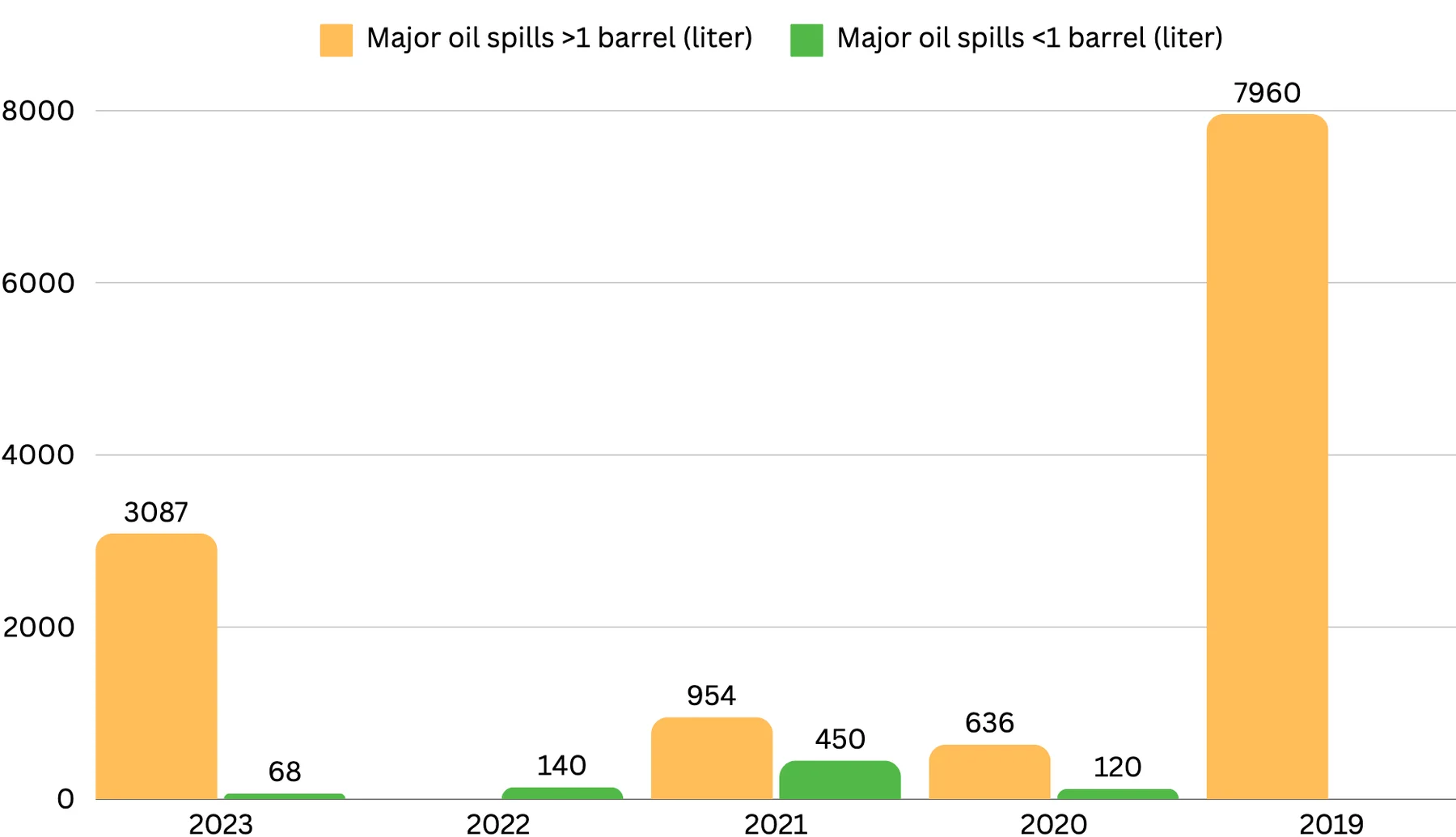
The 2023 oil spill is a stark reminder that there will never be enough precautions to prevent oil spills. EMP managed to recover 1,144 liters of the 1,185 liters of oil spilled. Following the accident, EMP conducted a comprehensive root cause analysis and identified necessary corrective actions.
For more information, please see the 2023 PT ITA Oil Spill Deep Dive.
Amount of Oil Spill
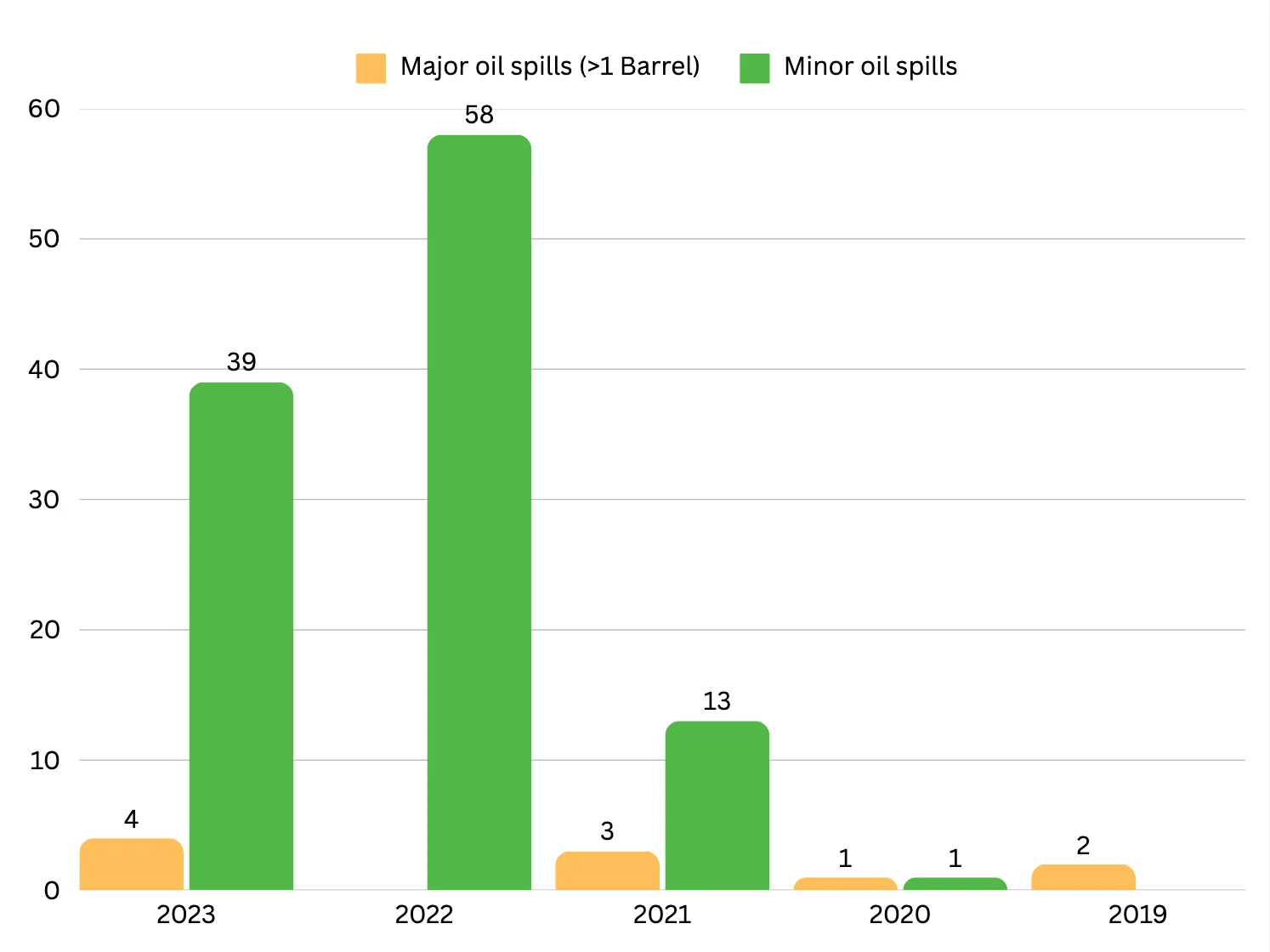
Oil Spill Volume
Oil Spill Response Practices
Driven by a comprehensive Safety, Health and Environment (SHE) Policy, EMP is committed to upholding the highest standards in safety and environmental stewardship through appropriate oil spill risk management. To minimize the risks and impacts of oil spills, EMP applies a three-pronged approach: prevention, response and adaptation to best practices .
To reduce business risks related to oil spills, a strong prevention policy is the most effective step. With a proactive approach to repair and operations, EMP minimizes the chances of an accident occurring in the first place.
EMP implements this through operational procedures such as:
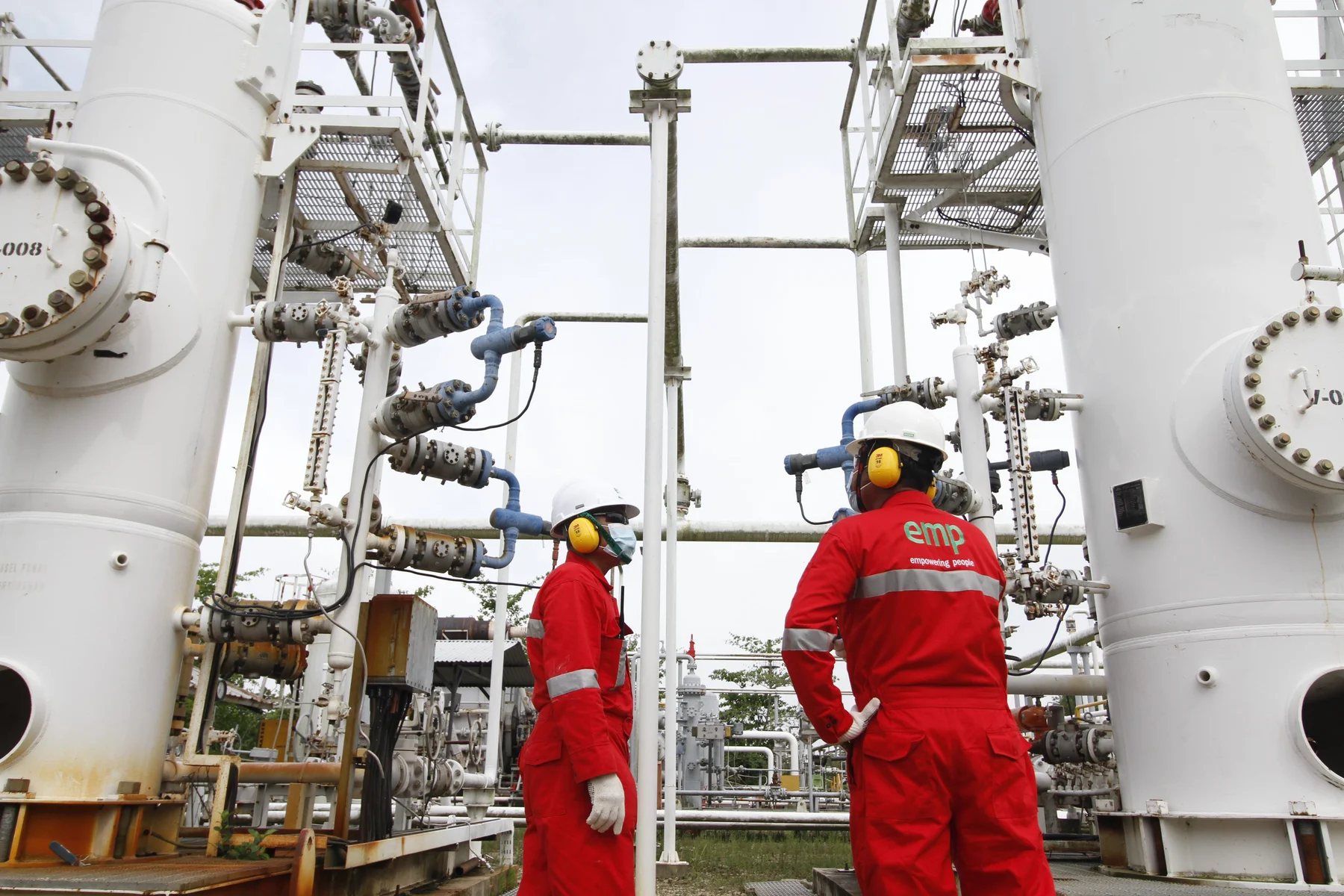
Routine inspection of pipeline integrity is conducted at the business unit level. The operations team is responsible for the integrity of the pipeline. If damage is found, immediate follow-up actions are taken to reduce the risk of oil spills or safety hazards. This process is overseen by the Engineering Team Manager on site who reports directly to the General Manager.
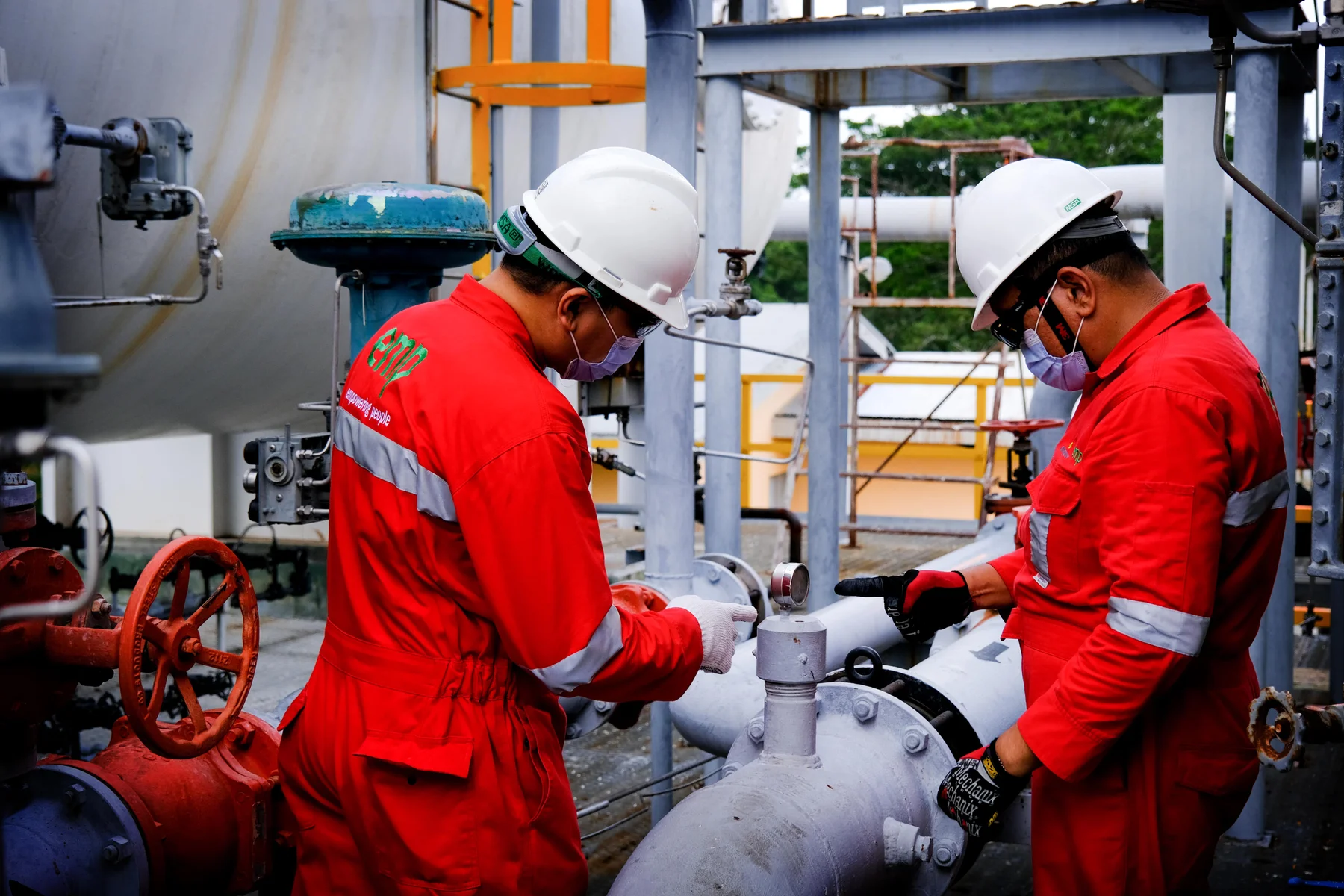
Pipe Rejuvenation Process for detected oil spill risks (e.g. corrosion), where pipes at high risk of causing oil spills are replaced.
Regular application of anti-corrosion measures in all our pipes, such as the application of cathodic protection technologies and biocide in pipelines to prevent corrosion.
However, EMP acknowledges that even with the right prevention in place, minor oil spills may still occur. In such scenarios, a robust response system will be crucial in containing the harm done through an oil spill.
EMP has in place an effective emergency response system, which involves:
An Emergency Control Team and Emergency Control Room
which is immediately notified and activated upon any traces of oil spills, regardless of size of the spill.
Oil Spill Incident Notification Procedure
Alarm triggered to the Vice-President SHE and Emergency Response Taskforce, which includes Board-level members.
Emergency Action Plan and Governance
A set of detailed procedures on the necessary follow-up actions with the Initiative Action Plan detailing the procedures for containing the spread and investigating the source of the oil spill, with an explicit governance structure on the roles and responsibilities during an emergency.
Coordination with Local Supervisory Bodies
Clear communication channels established with the local regulatory bodies (e.g. SKK Migas, Ministry of Forestry and Environment)
Immediate action needs to be taken upon detection of a leakage. This is stipulated by the company’s Oil Spill Contingency Plan (OSCP) – which sets out the responses depending on the scale of the oil spill (Small, Large and Catastrophic). This includes, but is not limited to the following:
| Response | Examples of Actions to Take |
|---|---|
| Beginning | • Immediate action to avoid injury or loss of life of crew members or the general public • Immediate action to stop or reduce the level of leakage to a level that is safe to do so • Notification of the Local Company Senior Representative of the situation • Activation of procedures to mitigate or control the release |
| Short-term | • Spraying from a locally available work boat spraying system • Initiating skimming operations if a local skimmer is available • Conducting regular surveillance of the spill to determine the extent of air spread and direction of the spill • Implementing spill tracking procedures • Installing protective booms to protect sensitive beach areas. |
| Long-term | • Continue control and skimming operations to minimize the amount of oil reaching the shore • Maintain dispersant spraying operations as long as they are effective • Mobilize beach cleanup teams, onshore construction equipment, and residential facilities for beach cleanup operations • Conduct environmental surveys to determine the extent of contamination.• Identify and open waste disposal sites, if available. • Conduct environmental surveys to determine the extent of contamination and to identify locations that are candidates for self-remediation by natural biodegradation. |
Following the immediate impact of the oil spill, a thorough identification of root causes and system failures will be undertaken, as dictated by the company’s Operational Excellence Management System (OEMS). This process aims to identify gaps in procedures and the necessary corrective actions. The site General Manager is responsible for this follow-up with support from the SHE team who will monitor and report on the progress of corrective actions.
EMP’s commitment to preventing oil spills is also supported by:
- Approval by the Director General of Maritime Transportation for the EMP Oil Spill Response Policy.
- ISO-14001 certification as part of SHE EMP Policy.
- Audit by independent certification TÜV Rheinland for our SHE Policy.
- Level 1 and Level 2 certification for first responders by the International Maritime Organization; Level 3 certification for Senior Management members.
Deep Dive | PT ITA Oil Spill 2023
On May 9, 2023, an oil spill was detected in Selat Lalang due to a leak in the conductor casing of the MWE-03 well. At 09:45 a.m., a production engineer who was conducting a routine patrol on the LWA platform first identified the problem, seeing oil mixing near the West LP — LQ platform.
In accordance with the Oil Spill Emergency Response procedure, a report was immediately made to the Production Supervisor, who then notified the Field Response Team for further action. A marine patrol vessel was deployed at 09:50 a.m. to clean up and investigate the source of the oil spill. At 16:40 p.m., the source of the leak was found to be from the MWE-03 well on the MWE platform, which is approximately 4.5 km from the LP platform.
In response, a temporary clamp was applied to the casing to stop the leak, followed by the installation of a permanent clamp in late June 2023. Of the 1,185 litres of oil spilled, the rapid response policy EMP successfully recovered 1,144 liters of oil to be managed and disposed of in accordance with B3 waste management guidelines.
Throughout this process, EMP worked closely with the Siak Regency Environmental Agency and SKK Migas SUMBAGUT to handle the oil spill at the affected location. EMP also conducted routine patrols during the installation of permanent clamps. Results of local soil sample evaluations, sediment analysis, and seawater by Siak Regency indicated no lasting pollution effects.
In accordance with practices set out in the Oil Spill Contingency Plan and other emergency response procedures, the oil spill management task was led by the on-site Area Manager, who reported directly to the General Manager with oversight from the Management Board.
This process was supported by the SHE team, who ensured accurate reporting and disclosure to relevant stakeholders, and the Corporate Social Responsibility (CSR) Team, who worked with the local community to determine compensation for livelihood disruptions (e.g. replacement of fishing gear).
Our Commitment to Sustainable Development
The incident at PT ITA revealed potential areas for improvement in EMP’s efforts to prevent oil spills. To prevent a similar incident from happening again, EMP conducted a thorough follow-up investigation to identify lessons learned.
The investigation highlighted structural integrity issues in oil well casing and wellhead pipe corrosion, which were under the supervision of two different teams – Operations and Drilling. The investigation emphasized the importance of increasing the frequency of pipe maintenance at the wellhead and the need to strengthen collaboration between teams to ensure an integrated pipe ecosystem.
A series of corrective actions were launched as a result of the oil spill. To ensure these lessons are translated into sustainable long-term changes, the corrective actions are overseen by the site General Manager, who reports directly to the Board Manager, with long-term changes to practices and policies including:
Instead of random inspection for wellheads daily, on-site inspection was now carried out daily to check for non-corroded casing and pressure within the tolerable limit
Stepping up the collaboration efforts between the different teams and leadership (VP Drilling and Senior Manager of Operations); including the development of a Wellhead Integration Team, which will bring together expertise across Production, Engineering and Drilling Teams
Enhancing the early detection systems in place for spillages through daily patrols around the platform, shorelines and areas of public interests (e.g. ports), with daily pictures taken to complement existing oil spill simulation models
Sending 20 of EMP’s mid-level management from the field for IMO Level 2 Oil Response certifications; and a further 3 of Senior Level Management Team (including Area Manager, Senior Operations Manager and Engineering Manager) to attend IMO Level 3 Oil Response course